
BestOnlyFans Data: How External Ranking Sites Verify Prices
OnlyFans operates as a closed platform, which means the pricing data you see on external ranking sites is assembled without official API access. That single fact shapes everything about how BestOnlyFans and similar directories collect, verify, and publish subscription prices.
This article looks at the backend methodology rather than the subscriber-facing side of rankings. You will see how datasets get built, where delays and errors creep in, and how to judge any ranking card you encounter.

The Challenge of Scraping Without an API
OnlyFans does not publish a public API for third parties. There is no endpoint a ranking site can call to pull a creator’s current subscription price, tier list, or promotional status. Every data point must be gathered another way, and each alternative method carries its own delay.

The platform also has no native discovery feed or directory. Subscribers cannot browse a searchable index of creators inside OnlyFans itself, which is precisely why external ranking sites exist in the first place. Those sites fill a genuine gap, but they fill it without privileged access.

Dynamic pricing makes the problem harder. A creator can adjust a base rate, launch a limited promotion, or switch a page from free to paid without sending any notification to outside observers. There is no changelog feed, so ranking sites only learn about changes when they observe them.
- No public API for querying creator pricing programmatically.
- No native search or directory inside the platform.
- Dynamic pricing with no notification or changelog feed.
- Anti-scraping protections that block automated collection.
Those four barriers mean pricing data is always reconstructed after the fact. The result is a permanent gap between what a creator charges right now and what a ranking site displays today.
Primary Data Collection Methods Compared
Ranking platforms generally rely on one or more of three approaches, and each one trades accuracy against speed. Understanding which method produced a given listing tells you how much confidence to place in it. Monitored sample accounts involve maintaining active subscriptions to track what a page actually charges at renewal. This is the most reliable method because it observes the real transaction, but it is slow, costly, and limited by how many accounts a site can maintain.
Verified subscriber submissions rely on users reporting what they paid. Volume is high, but reports can be outdated, misremembered, or submitted by people with an incentive to misstate a price. Algorithmic inference reads social signals, post frequency, and follower growth to estimate pricing. It never touches the actual checkout page, so it is the least dependable of the three.
- Monitored sample accounts — highest accuracy, since the price is observed directly at the point of renewal, but coverage is narrow and updates take days.
- Verified subscriber submissions — medium accuracy, dependent on user honesty and timing, with wider coverage but weaker per-datapoint reliability.
- Algorithmic inference from social signals — lowest accuracy, useful only as a directional estimate rather than a confirmed figure.
| Method | Accuracy Level | Typical Lag Time |
|---|---|---|
| Monitored sample accounts | High | 24-72 hours |
| Subscriber submissions | Medium | 3-14 days |
| Algorithmic inference | Low | Variable/undefined |
Most established directories blend all three. A site might use submissions to detect that something changed, then confirm it with a monitored account before publishing the new figure.
Verification Protocols for Price History Claims
A single observation is not enough to publish a price. Ranking sites that take accuracy seriously cross-reference multiple timestamped observations before a figure reaches a public listing page.
When two observations conflict, the newer one does not automatically win. Editors check whether the difference reflects a genuine change, a promotional period, or a reporting error, then decide which value to display.
Warning: if a ranking site ever displays a paid base subscription below $4.99, treat that listing as unreliable. The platform minimum for a paid base price is $4.99, so anything lower is either a promotional first month or a data error.
Suspicious movements get routed to manual review rather than auto-published. Reviewers look for patterns that suggest bad data rather than a real price change.
- Price drops below the $4.99 base minimum.
- Identical prices across unrelated creators.
- Timestamp collisions suggesting bulk data entry.
- Reversed price sequences that contradict history.
- Unverified promotional claims with no supporting observation.
Identity and account security matter here too. Some fraudulent pages impersonate popular creators and rely on rushed subscriptions, a pattern connected to identity theft tactics seen across social platforms.
Handling Creator Price Change Frequencies
Creators change prices more often than most subscribers assume. Promotions launch and expire, bundles get introduced, and pages shift between free and paid models, all without any external announcement. Ranking sites have to distinguish a permanent base price adjustment from a temporary shift. A base change persists across renewal cycles, while a promotion reverts once the offer window closes.
Mid-cycle changes are the hardest to detect. If a creator raises the price while existing subscribers are mid-period, auto-renew stops and current access lasts until the paid period ends, so the visible price and the effective price can diverge for weeks. Several factors make detection even messier, and each one can produce a listing that looks wrong but is technically accurate for the moment it was captured.
- Promotional periods ending without notice.
- Bundle introductions that change effective cost per month.
- Free-to-paid transitions that reset the visible price.
- Temporary discounts that resemble permanent reductions.
The practical takeaway is that lag time is unavoidable. Even a well-run directory is showing you a snapshot, not a live feed.
BestOnlyFans Methodology Standards
BestOnlyFans structures its workflow around minimum observation thresholds. A price is not published until it has been seen more than once, ideally across separate collection cycles, which reduces the chance of a single bad reading reaching the public listing.
Displayed price histories carry confidence scoring. A figure confirmed by direct observation scores higher than one assembled from subscriber reports, and the two are not presented with equal weight.
This matters because the ranking card you see is a summary of a process, not a raw number. When you compare directories, look at how each one labels its confidence and recency.

Aggregators that catalogue categories, including roundups of the best onlyfans australia models, inherit the same constraints. They can only publish what their collection pipeline actually verified.
Data Decay and Stale Listing Risks
Ranking data decays quickly. A price recorded a month ago has a meaningful chance of being wrong today, especially for creators who run frequent promotions or adjust tiers seasonally.
There is no universal expiry rule, but most directories refresh high-traffic listings more often than niche ones. A popular page might be rechecked weekly, while a smaller listing could sit untouched for a month or longer.
| Data Age | Price Reliability | Recommended Action |
|---|---|---|
| 0-7 days | High | Proceed with confidence |
| 8-30 days | Moderate | Verify before subscribing |
| 31+ days | Low | Do not trust without direct confirmation |
Stale listings rarely announce themselves. The page looks the same whether the data was refreshed yesterday or six weeks ago, so recency indicators are worth checking before you commit.
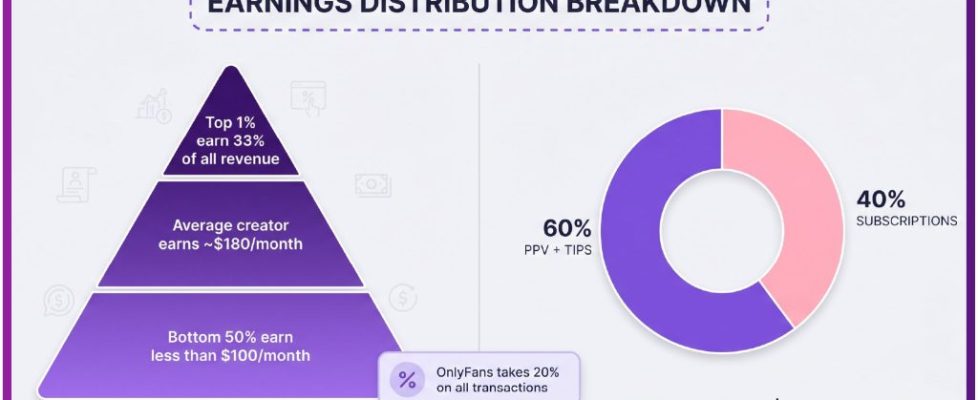
One platform fact worth remembering: the platform takes 20% of everything and the creator keeps 80%. That split never changes, but the subscription price it applies to changes often.
Subscriber Strategies for Cross-Checking Rankings
No single external platform should be your only source. Treat every ranking card as a starting point and confirm the number yourself before entering payment details.
- Check the creator’s social media for current promotions or pinned price announcements.
- Observe whether the auto-renew status on the subscription page matches the price the ranking claims.
- Compare the figure across at least two ranking platforms and note any disagreement.
- Look for recent subscriber reviews that mention the actual price paid.
- Confirm the listing does not violate the $4.99 minimum rule for a paid base subscription.
It also helps to know the normal shape of the market. Typical paid subscriptions land between $4.99 and $15, with most clustering around $5 to $10, while free pages charge $0 and earn through pay-per-view and tips instead.
Pay-per-view unlocks run up to $50, paid chat commonly sits at $3 to $5 per message, and tips can reach $100. None of those figures are part of the base subscription, so a ranking that folds them into a headline price is misleading.

If you decide to stop a subscription, the cancellation flow is straightforward, and understanding it in advance makes it easier to avoid unwanted renewals. A card verification hold of $0.10 also applies at signup and is refunded within days.
FAQ
Why do the ranking site prices sometimes differ from what I see on OnlyFans?
The most common reason is timing. A ranking site publishes a verified snapshot, and the creator may have changed the price after that snapshot was captured. Promotional first months can also sit below the standard base rate, which makes the two figures look inconsistent even when both were correct when recorded.
How quickly does this directory update when a creator changes their subscription price?
It depends on the collection method behind that listing. Directly monitored accounts typically refresh within 24 to 72 hours, while subscriber-submitted data can take up to two weeks to be confirmed and published.
Can ranking sites detect temporary promotional pricing versus permanent base price changes?
Partially. A promotion that reverts on schedule looks identical to a permanent cut until the offer window closes. Sites separate the two by watching whether the lower figure persists across renewal cycles, which takes time.
What should I do if a ranking site shows a price below the $4.99 OnlyFans minimum?
Treat it as an error unless it is explicitly labeled a promotional first month. A paid base subscription cannot sit below $4.99, so verify the price on the subscription page itself before paying.
